Trekking & Adventure
Mount Toubkal Trekking: Everything You Need to Know
The practical side of a Toubkal trek: booking, what affects the price, a typical day, refuges, food, mules, safety, insurance, tipping and travelling solo.
Atlas Trek TravelPublished 4 min read
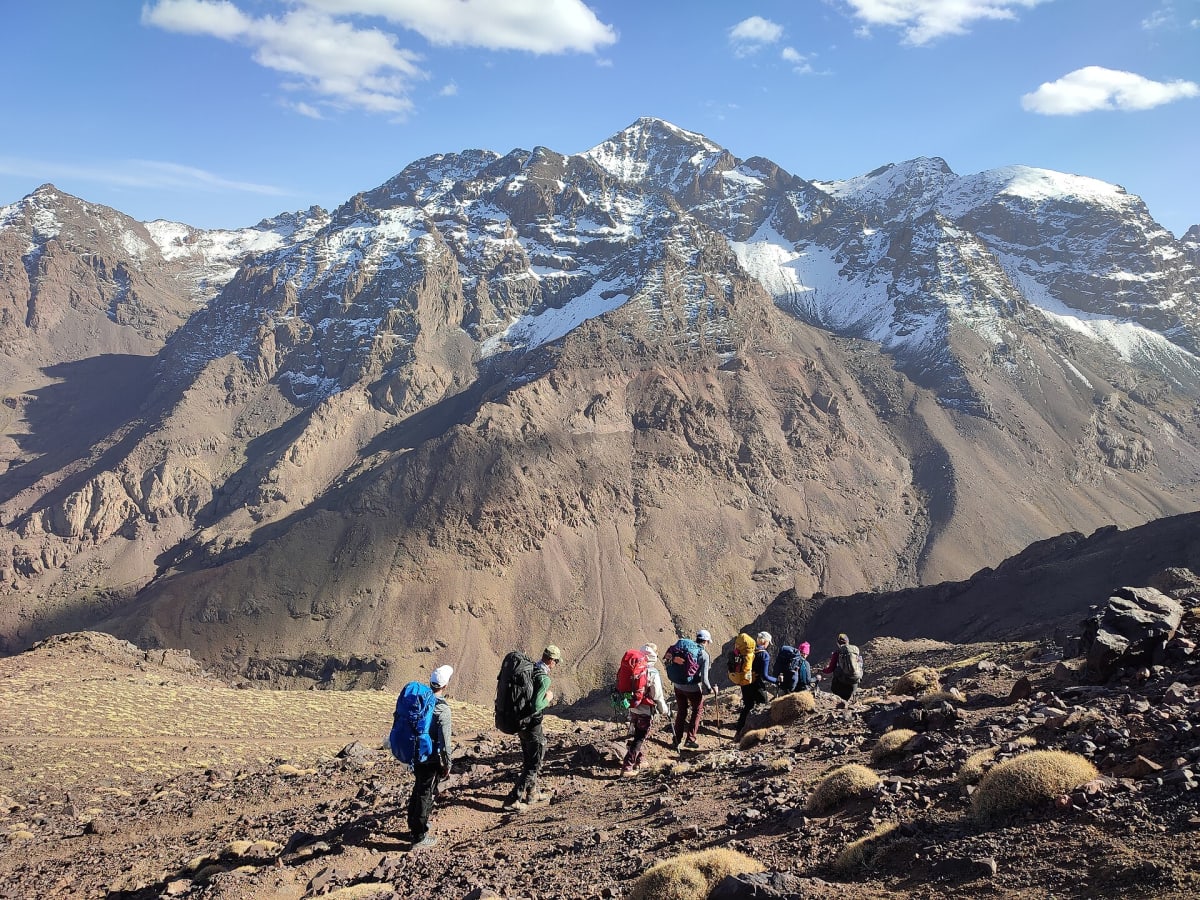
Our complete guide to Mount Toubkal explains the route, the difficulty and the seasons. This article focuses on the practical questions people ask us before they book: how the trek is organised, what affects the price, what a day on the mountain looks like and how to stay safe and comfortable.
How is a Toubkal trek organised?
A typical trek is built from a few elements:
- A licensed local guide, who leads the trek, manages pace and safety and handles local logistics.
- Transport from Marrakech or the airport to Imlil and back, if you need it.
- Accommodation: usually a night at one of the mountain refuges at around 3,200 m, sometimes plus a night in the valley.
- Meals along the way and at the refuge.
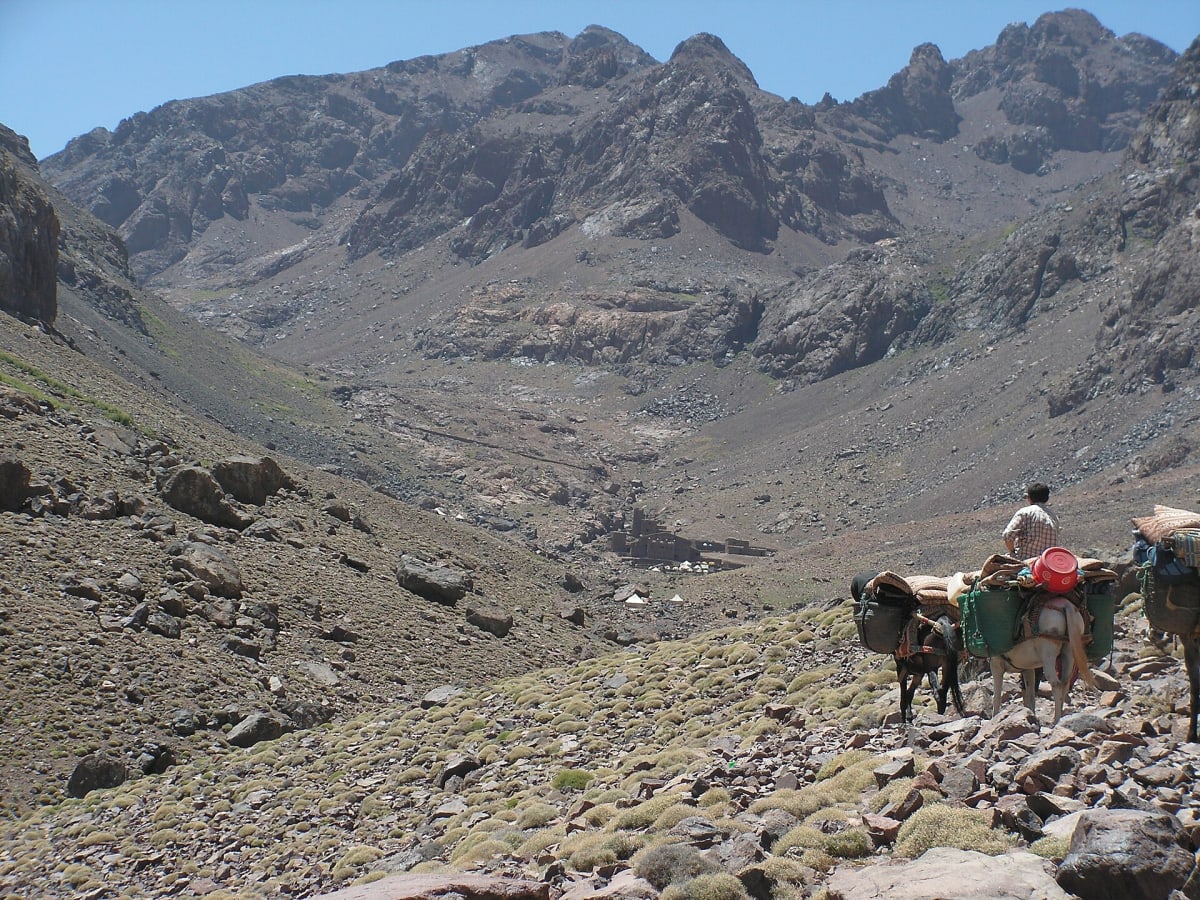
- Mules to carry the main luggage to the refuge, so you walk with a daypack.
Each element can be adapted. Some travellers arrive in Imlil independently; others want everything arranged from the airport. Our Mount Toubkal 2-day trek shows what is included and what we confirm with you in your quote.
What affects the price?
We do not publish a single fixed price because the cost genuinely depends on your plan. The main factors are:
- Group size. Some costs, such as the guide, are shared — so per-person prices usually fall as the group grows.
- Number of days. A three-day itinerary adds accommodation and meals.
- Transport. A private transfer from the airport or Marrakech is an additional service.
- Season and conditions. Winter ascents may require additional equipment.
- Accommodation choices in the valley before or after the trek.
We send a clear, itemised quote before anything is confirmed — no hidden extras.
What does a typical day look like?
Day one usually starts in the morning in Imlil. After a short briefing, you walk up the Mizane valley at a steady pace, with breaks for water and photos. Lunch is often taken around Sidi Chamharouch. In the afternoon you reach the refuge, rest, drink plenty and eat an early dinner. Bedtime is early.
Day two begins in darkness. After a light breakfast you set off with a head-torch to climb the south cirque, reaching the summit after three to four hours. After photos and a short rest, you descend to the refuge, eat and continue down to Imlil, arriving in the afternoon or early evening.
What are the refuges like?
The refuges are simple stone buildings with dormitories, shared washrooms and a dining area. Expect bunk beds, communal spaces and cold nights. Bring a warm layer for the evening and consider a sleeping-bag liner. In high season the refuges are busy, so earplugs are useful.
What about food and water?
Meals on a trek are typically Moroccan mountain food: bread, soups, tagines, rice or pasta, fruit and plenty of tea. Tell us about dietary requirements when you book.
Water is available along the route and at the refuge, but we recommend carrying a filter or purification tablets, or buying bottled water where available. Drinking enough is one of the best ways to cope with altitude.
How safe is the trek?
In good conditions, the standard route is non-technical, but the mountain demands respect. The main risks are altitude sickness, falls on loose ground, cold and sudden weather changes. Your guide will:
- set a pace that helps acclimatisation;
- watch for signs of altitude sickness (headache, nausea, dizziness, unusual fatigue);
- adapt or turn back if conditions require it.
The UK NHS has a clear page on altitude sickness worth reading before you go. Always tell your guide if you feel unwell.
Do I need a guide by law?
Hikers in the Toubkal area have been expected to walk with a licensed local guide since around 2019. We confirm current requirements when you book. Read our comparison of guided trekking and independent hiking for the full picture.
Insurance, money and tipping
- Insurance: choose a policy covering hiking at altitude, mountain rescue and medical evacuation.
- Money: bring Moroccan dirhams in cash for drinks and small purchases; card payment is not always possible in the mountains.
- Tipping: tips are customary in Morocco and appreciated by guides and muleteers, but always at your discretion.
Can I trek solo, with children or as a group?
- Solo travellers are welcome: our treks are private, so you set the pace.
- Families should consider whether Toubkal suits younger children; village walks around Imlil are often a better choice — see our family-friendly excursion.
- Groups can trek together and share logistics, which usually reduces the cost per person.
How do I prepare?
Good general fitness matters more than anything else. Our guide to preparing for a High Atlas trek offers a simple training approach, and our Toubkal packing list tells you exactly what to bring.
Getting there and back
Imlil is about 1 hour 30 minutes from Marrakech. Many trekkers combine the climb with a private transfer from Marrakech Airport to Imlil on arrival and an Imlil to Marrakech Airport transfer at the end, timed around their flight.
Ready to book?
Send us your dates, group size and experience, and we will reply personally with a proposed itinerary and a clear quote. Request your Toubkal trek.
Frequently asked questions
How much does a Toubkal trek cost?
Prices depend on group size, the number of days, transport, accommodation and season. We send a clear quote for your exact plan before anything is confirmed.
Can I join as a solo traveller?
Yes. Our treks are private, so a solo traveller has the guide's full attention. Tell us your experience and we will plan accordingly.
Do I need travel insurance?
Yes. We strongly recommend insurance that covers hiking at altitude, including mountain rescue and medical evacuation.
Ready for the mountains?
Tell us your dates and what you would like to do. We will reply personally with ideas, availability and a clear quote.