Trekking & Adventure
Guided Trekking vs Independent Hiking in Morocco
Should you hire a guide in the Atlas Mountains? An honest comparison of guided and independent hiking in Morocco: rules, safety, cost, freedom and cultural experience.
Atlas Trek TravelPublished 4 min read
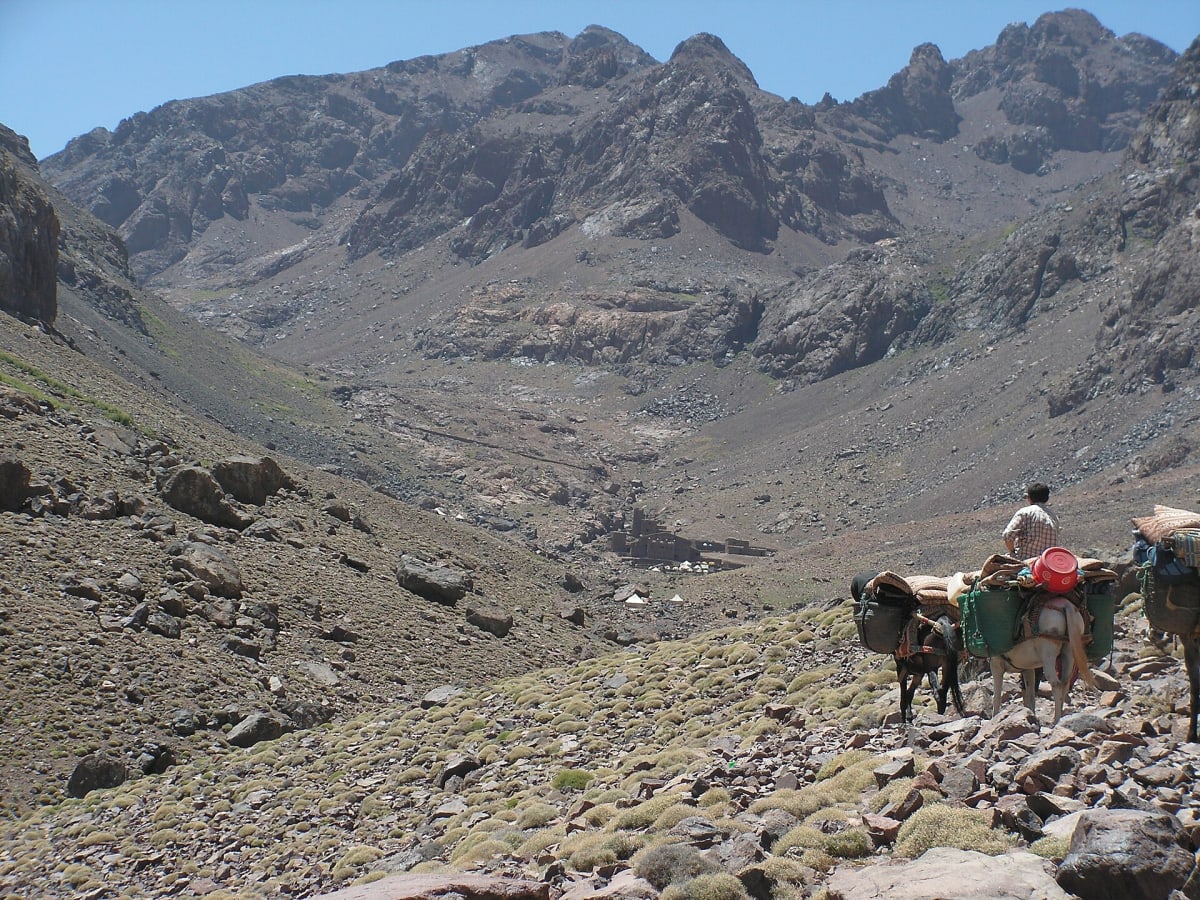
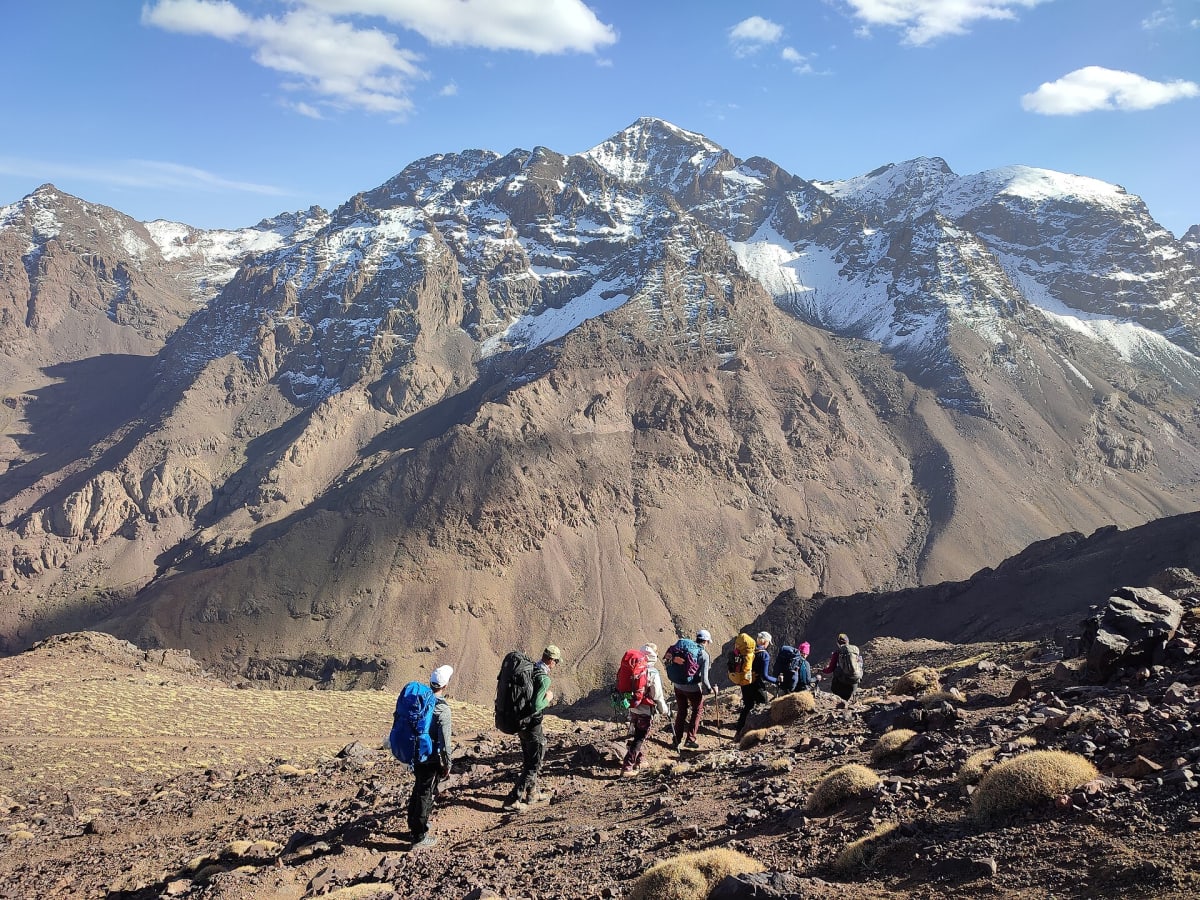
Many experienced hikers are used to exploring mountains on their own, with a map and a plan. So it is natural to ask: do I really need a guide in Morocco? The honest answer depends on where you want to go — and, in the Toubkal area, on the rules. This article compares guided and independent hiking in the High Atlas so you can make an informed decision.
The rules around Toubkal
Since around 2018–2019, after a tragic incident in the area, hikers in the Toubkal region have been expected to be accompanied by a licensed local guide. This requirement is widely reported by travellers and operators, and checkpoints have been present on the main trail. We always recommend confirming the current rules before travelling, as practices can change.
For the classic Toubkal ascent, then, the question is less "guide or no guide?" and more "which guide?".
What independent hiking offers
Independent hiking has real attractions:
- Freedom to choose your own pace, timing and route.
- Lower direct cost, at least on paper.
- A sense of self-reliance that many experienced hikers enjoy.
In parts of the Atlas away from Toubkal, experienced hikers do walk independently. But it comes with challenges that are easy to underestimate.
The challenges of hiking alone in the Atlas
Navigation
Mule paths branch constantly, signposting is rare and maps are not always reliable. In poor visibility or on high, stony ground, routes are easy to lose. A wrong turn can add hours to a day.
Language and local knowledge
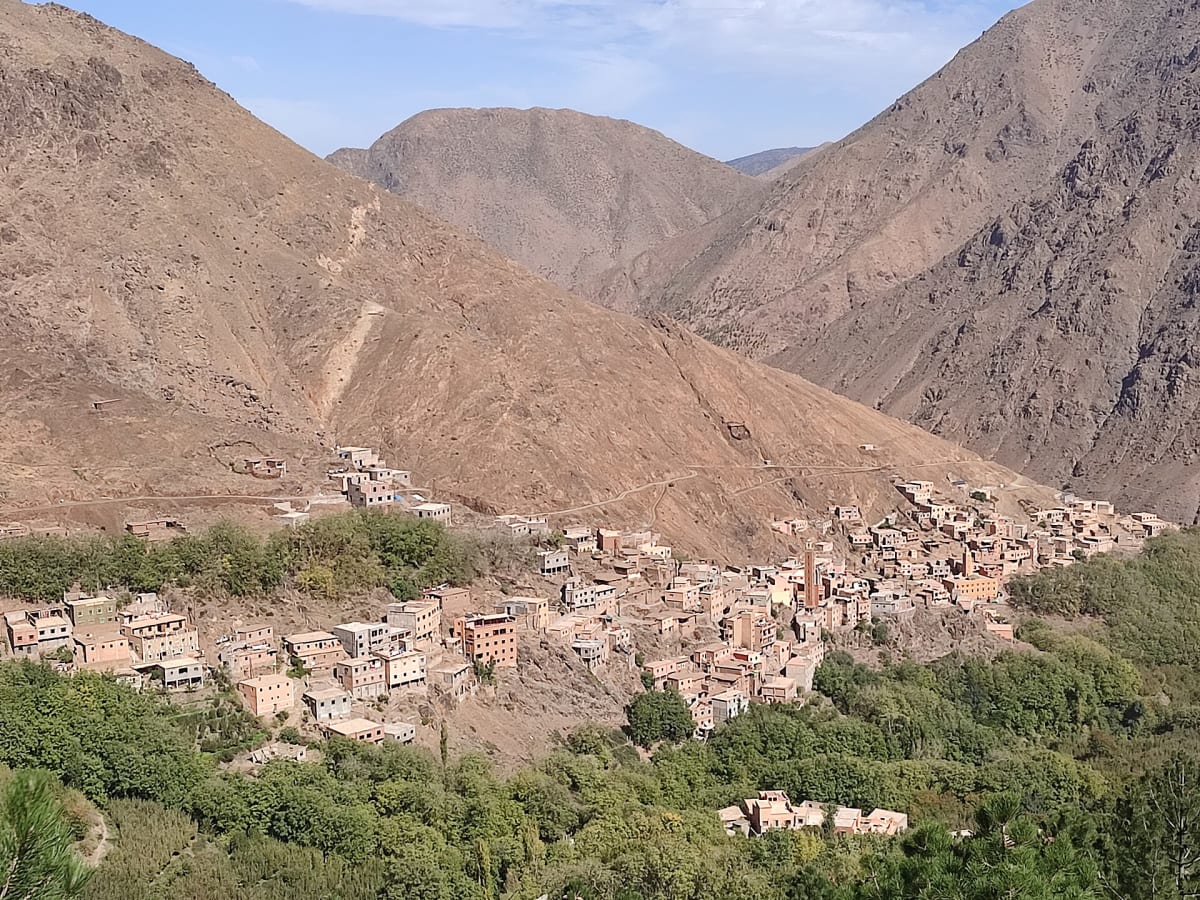
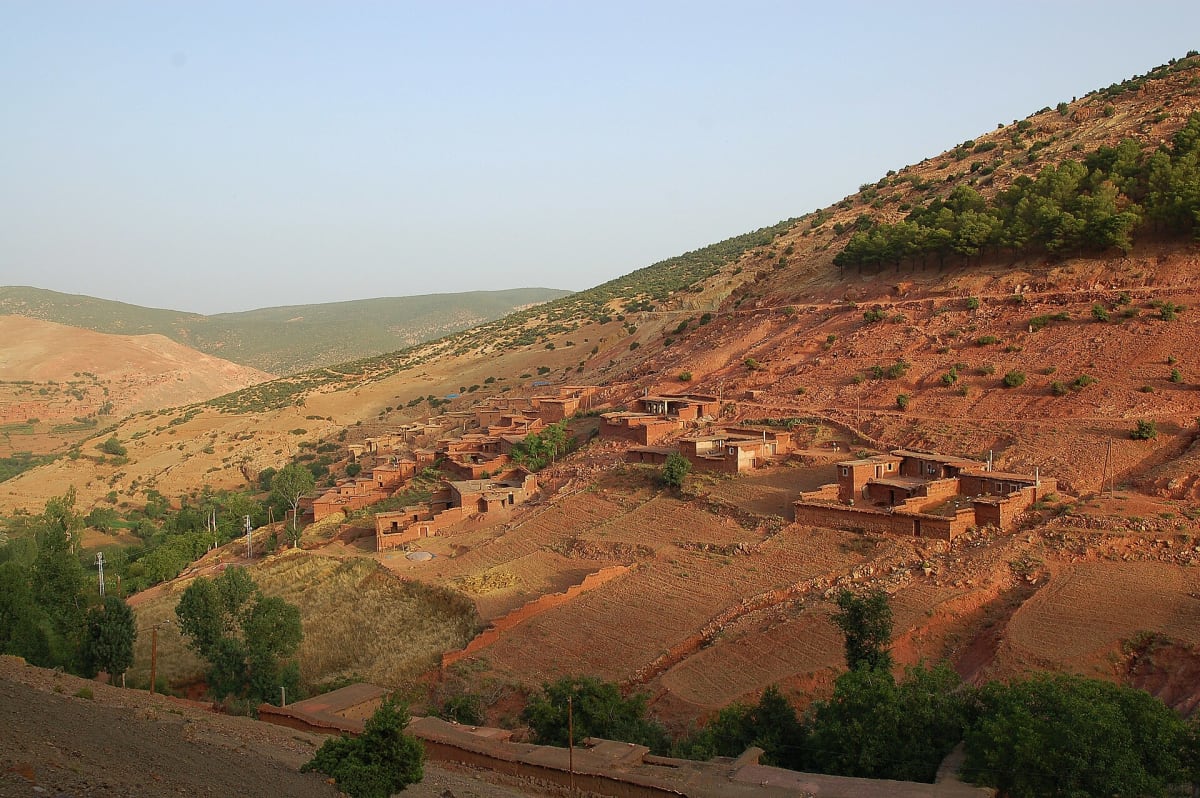
In the villages, Tashelhit and Arabic are the main languages. Without them, asking for directions, finding accommodation or understanding local customs can be difficult.
Weather and terrain
Afternoon storms in summer, snow and ice in winter, and loose scree all year round require judgement. Knowing when to continue and when to turn back comes from experience of these specific mountains.
Logistics
Arranging mules, refuges, meals and transport independently takes time and effort, often in a language you do not speak.
What a good guide brings
A licensed local guide is not just someone who knows the way. A good guide:
- Keeps you safe, setting a pace that helps acclimatisation, watching for signs of altitude sickness and reading the weather.
- Handles logistics: refuges, mules, meals and transport.
- Opens doors: introductions in villages, tea with families, explanations of daily life you would never see alone.
- Shares stories: the history of the paths, the names of the peaks, the meaning of the shrine at Sidi Chamharouch.
- Supports the local economy, keeping income in the valley.
To meet the guide behind our own trips, read Abderrahim Choujaa's story.
Comparing costs honestly
Independent hiking looks cheaper, and sometimes it is. But once you add transport, refuge nights, meals, a mule for luggage and the time spent organising everything, the difference often narrows — especially for small groups sharing a guide. A private guided trek also gives you something difficult to price: peace of mind. We explain what affects the cost in Toubkal trekking: everything you need to know.
How to choose a good guide
- Ask about their licence and their experience on the route you plan.
- Prefer local guides who know the valley and its people.
- Book through a known operator rather than accepting offers from strangers in the street.
- Ask clear questions about what is included and what is not.
- Talk about safety: how they handle bad weather, altitude sickness or a member of the group who wants to turn back.
- Check communication: you should feel comfortable asking questions before and during the trek.
What a guided day actually feels like
Many independent hikers worry that a guide will take away their freedom. In practice, a good private guide adapts to you. You still choose how fast to walk, when to stop for photos and how long to rest at a viewpoint. The difference is that you no longer need to check the map at every junction, negotiate with muleteers or wonder whether the clouds building over the ridge are a reason to turn back. Most of our guests tell us they felt freer, not more constrained — able to look around rather than down at a screen.
When independent walking can make sense
For short, low-level walks near villages — for example around Imlil or Ouirgane — confident walkers can sometimes explore on their own, especially on well-used paths in good weather. Even then, a guide transforms a pleasant walk into a cultural experience. For anything on high ground, near Toubkal or in winter conditions, we strongly recommend going with a licensed guide.
Our approach
All our treks are private: you walk with a licensed local guide from Imlil, at your pace, with no strangers in your group. We adapt routes to your fitness and interests and are always honest about conditions. Explore our Mount Toubkal 2-day trek or our Imlil valley day hike, or read our guide to multi-day trekking in Morocco.
The bottom line
Around Toubkal, a licensed guide is expected — and for good reasons. Elsewhere, independent hiking is possible for experienced walkers on simple routes, but a guide almost always makes the experience safer, easier and richer. If you would like to discuss your plans, contact us and we will give you an honest opinion.
Frequently asked questions
Can I climb Toubkal without a guide?
Since around 2019, hikers in the Toubkal area have been expected to be accompanied by a licensed local guide. Check current rules before you travel.
Can I hike independently elsewhere in the Atlas?
Some low-level walks near villages are possible independently, but navigation, language and local rules make a guide valuable almost everywhere in the mountains.
How do I recognise a licensed guide?
Ask about their official guide licence and experience, and book through a known local operator rather than with someone you meet by chance in the street.
Ready for the mountains?
Tell us your dates and what you would like to do. We will reply personally with ideas, availability and a clear quote.