Destinations & Culture
Traditional Berber Villages in the High Atlas
How High Atlas villages are built, how communities share water and work the land, and how to visit Berber villages respectfully with a local guide.
Atlas Trek TravelPublished 4 min read
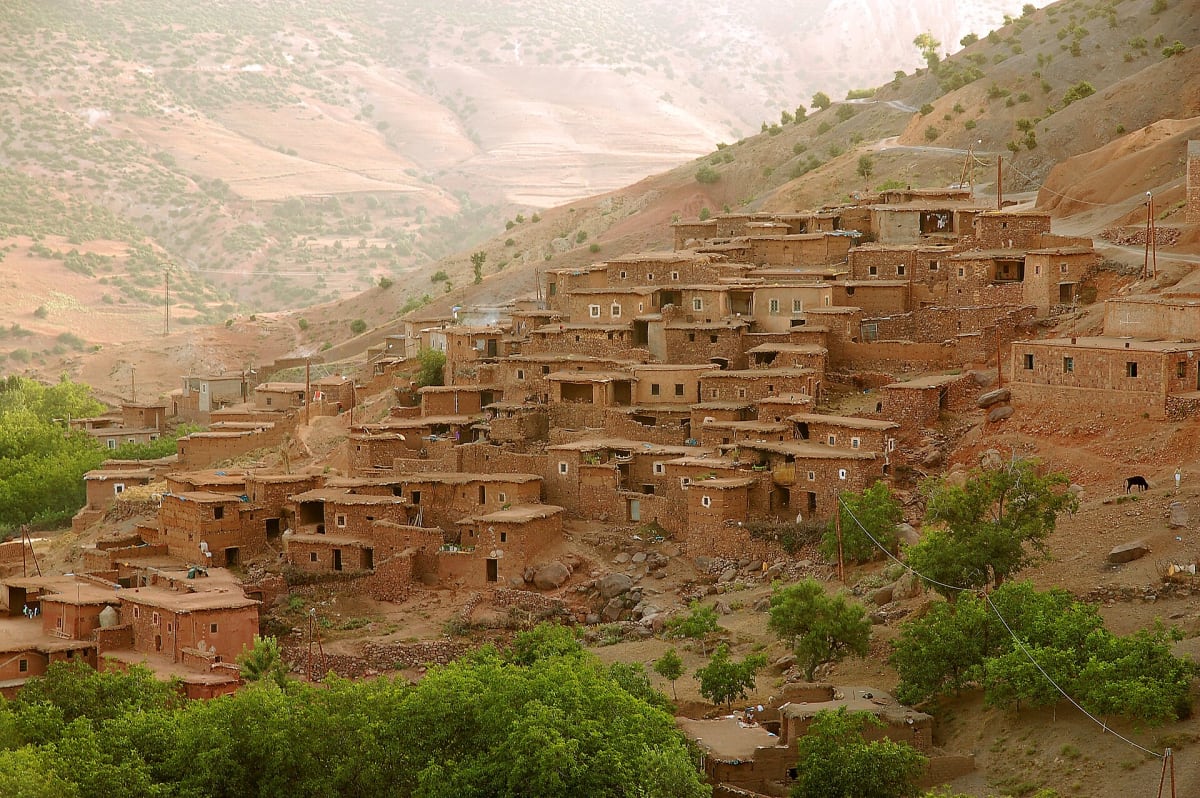
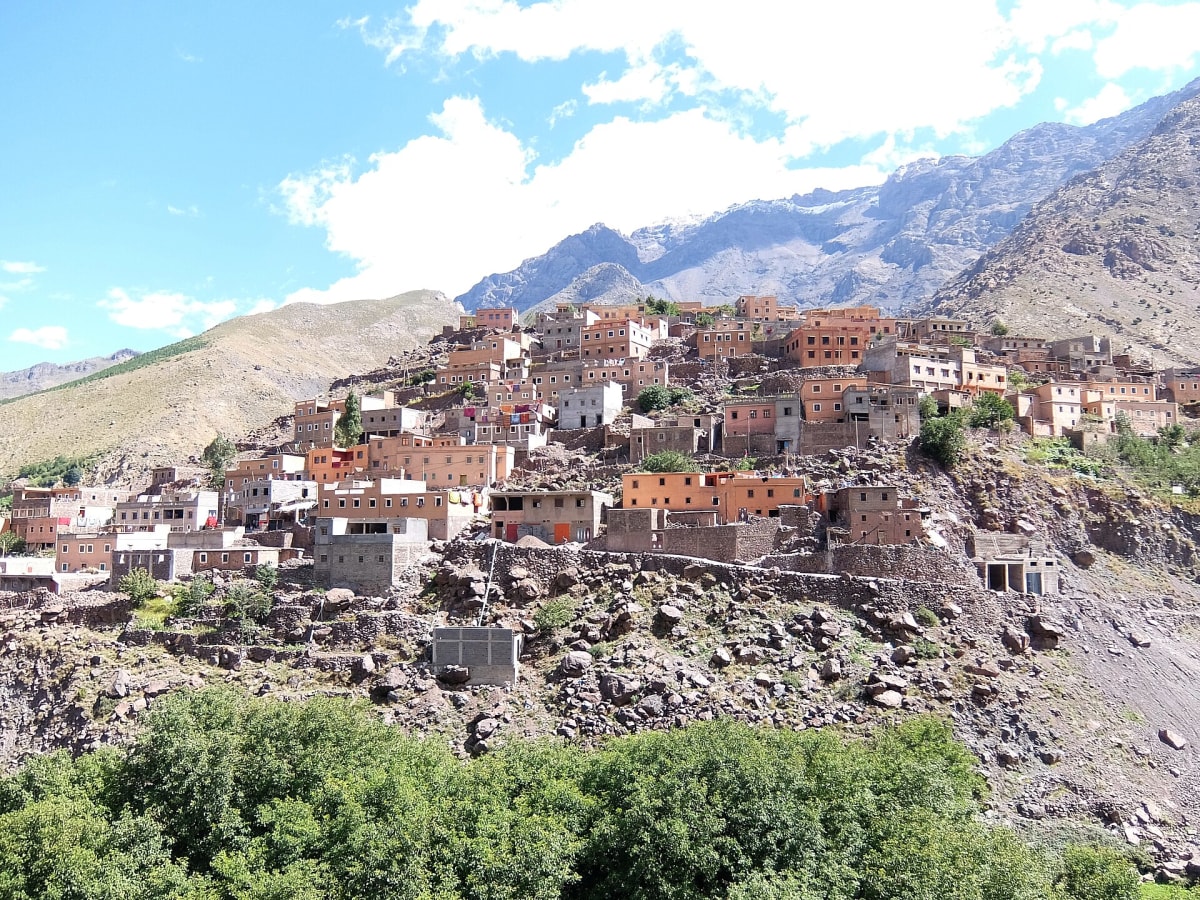
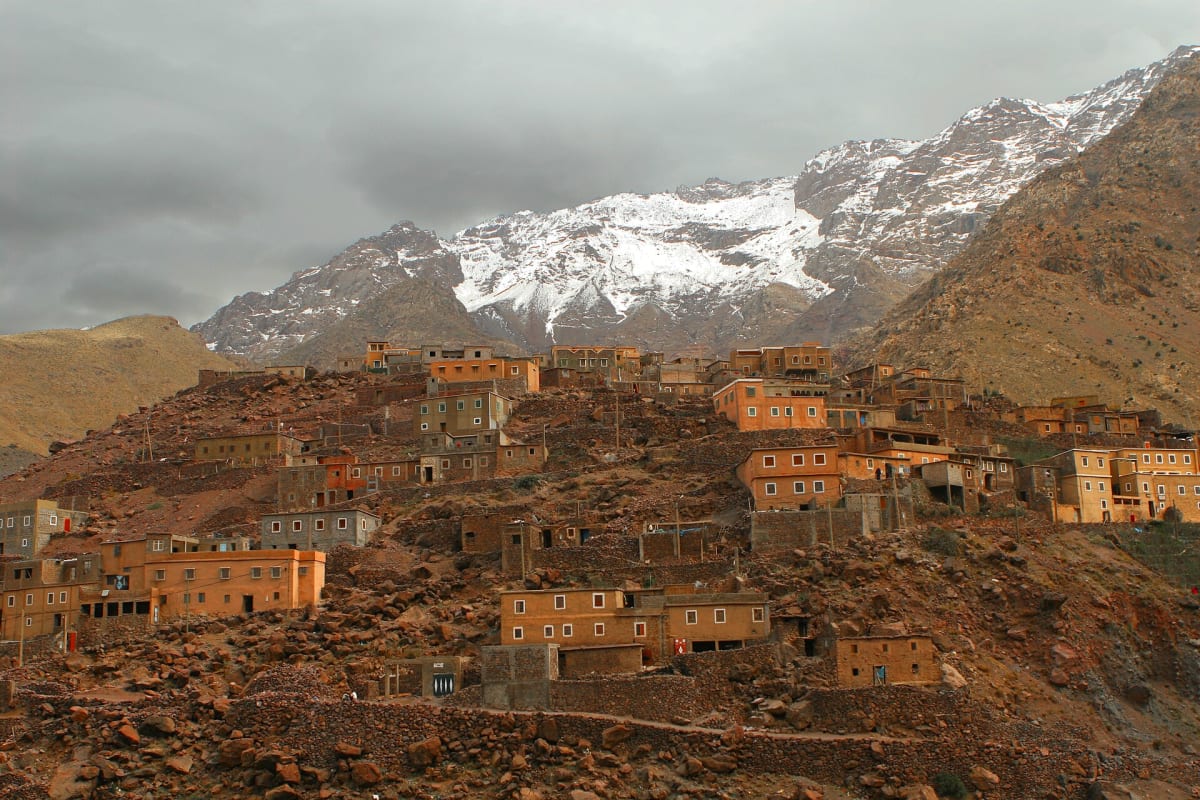
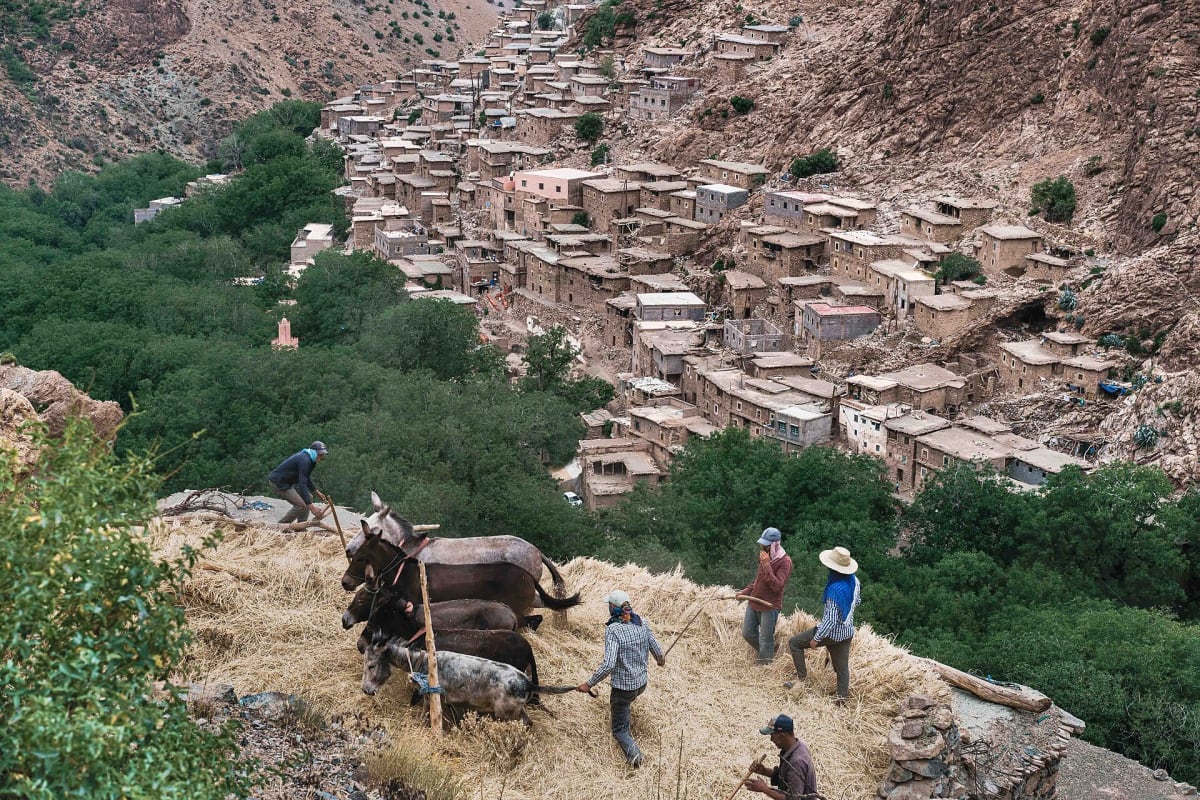
Walk for an hour from Imlil in almost any direction and you will reach a village that seems to grow out of the mountain itself. Houses of stone and earth climb the slope in steps, their flat roofs covered with drying maize or walnuts, while below them a patchwork of terraces is kept green by narrow irrigation channels. These are the traditional Amazigh (Berber) villages of the High Atlas — living communities, not museums.
This article explains how these villages work, what you can expect to see and how to visit them in a way that is respectful and genuinely rewarding.
Who lives in the High Atlas villages?
The people of the High Atlas are Amazigh, the indigenous people of North Africa often referred to as Berbers. In the Toubkal region, most speak Tashelhit (one of the Amazigh languages) as well as Moroccan Arabic, and many younger people also speak French or English. Families have farmed these valleys for generations, adapting to steep slopes, cold winters and limited water. Our article on Amazigh culture and traditions goes deeper into language, festivals and daily life.
Architecture shaped by the mountain
Traditional houses are built with what the mountain provides:
- Stone for foundations and lower walls, collected from the slopes.
- Earth packed or shaped into thick walls that keep interiors cool in summer and warm in winter.
- Wooden beams, often juniper or walnut, supporting flat roofs layered with branches and earth.
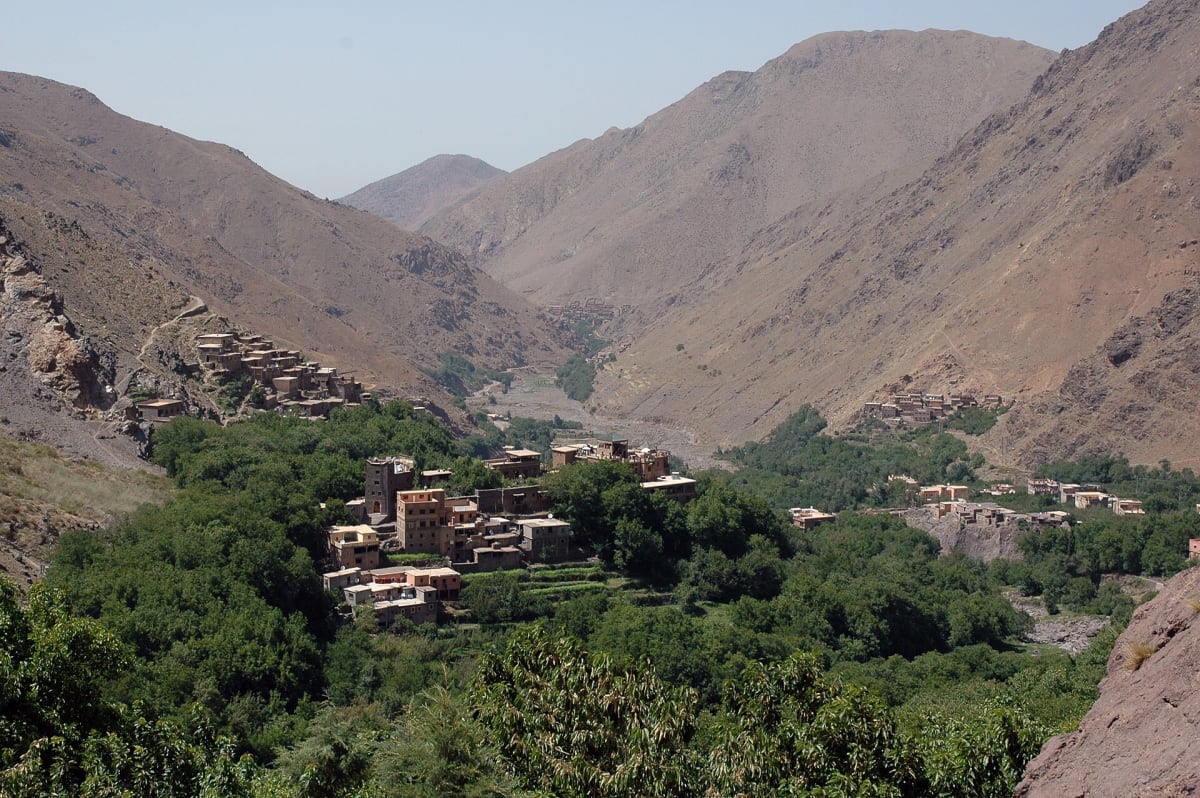
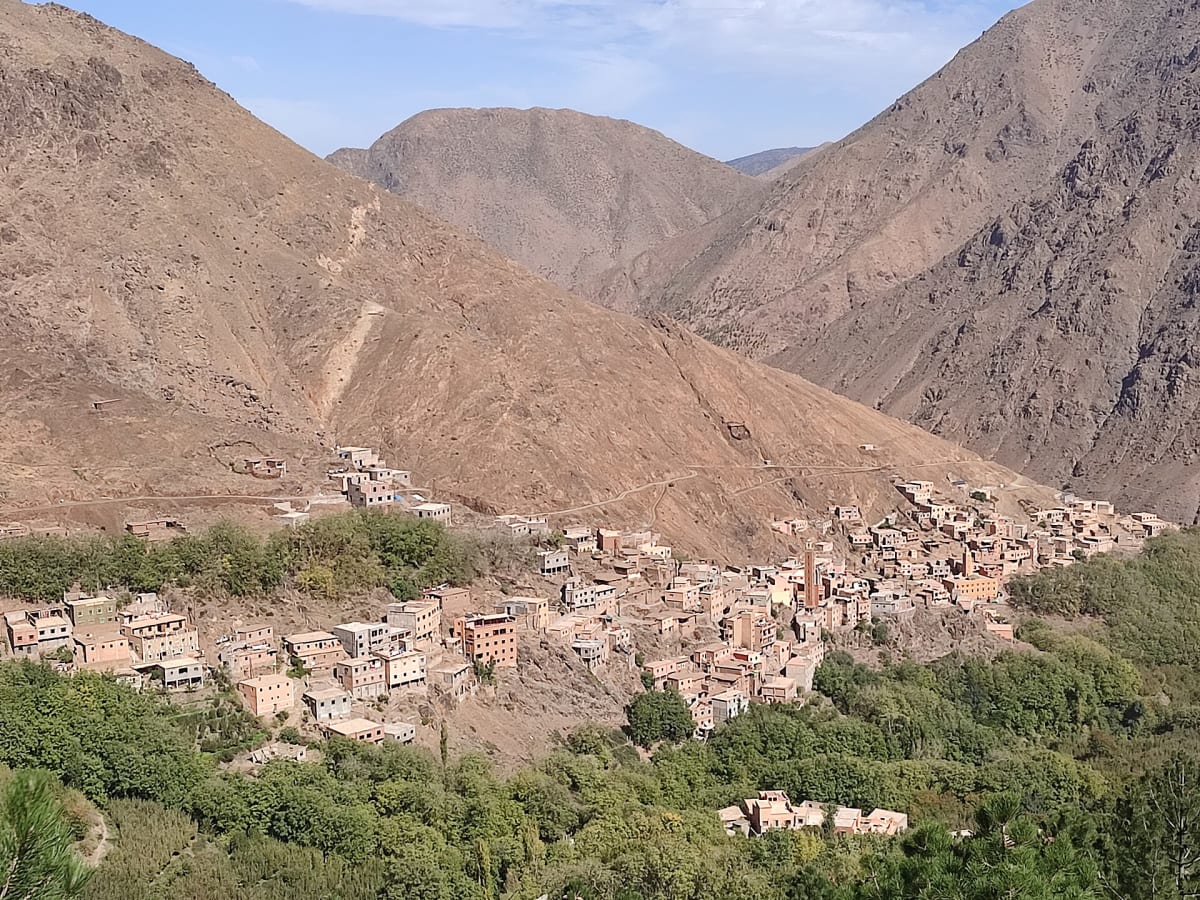
Villages are usually built on rocky ground or spurs, keeping the precious flat land for agriculture. This is why so many villages, like Aroumd above Imlil, appear perched above their fields. Flat roofs are working spaces: crops dry there in autumn, and in summer families sometimes sleep outside under the stars.
Some villages in the region were damaged by the earthquake of September 2023, and you may see reconstruction work, new materials alongside traditional ones and families adapting their homes. It is a reminder that these are places where people live, change and rebuild.
Water: the heart of village life
Nothing in a High Atlas village makes sense without water. Snowmelt and springs feed irrigation channels that run along the contours of the valley, distributing water to each family's terraces according to long-standing agreements. Maintaining these channels is a collective task, and the system is one of the clearest expressions of community life in the mountains.
Walking along a channel with a local guide, you will hear how water turns are organised, why certain crops are planted where they are and how the valley changes from spring to autumn.
The agricultural year
The village calendar follows the seasons:
- Spring: ploughing and planting, blossom in the orchards, the return of green to the terraces.
- Summer: irrigation, haymaking and, at altitude, the movement of animals to higher pastures.
- Autumn: harvests of maize, apples and especially walnuts, a major crop around Imlil; threshing grain on flat terraces.
- Winter: quieter months, cold nights and snow on the high ground.
Hospitality and etiquette
Visitors to High Atlas villages are often welcomed with mint tea and bread. This hospitality is sincere, and the best way to honour it is with respect:
- Dress modestly, especially in villages.
- Ask before photographing people, and accept a refusal gracefully.
- Do not hand out sweets or money to children — it encourages begging. If you wish to help, ask your guide about appropriate local initiatives.
- Follow your guide's lead when entering a home: remove shoes if others do, and accept tea with your right hand.
- Buy directly from local producers where possible.
How to visit Berber villages
The most rewarding way is on foot, with a guide from the valley who can introduce you and explain what you are seeing. A few options:
- A gentle half-day or full-day walk between villages around Imlil — see our Berber villages walk.
- A slower, more personal visit focused on daily life and hospitality — our Amazigh village experience.
- A day trip from Marrakech combining transport and a village walk — our private day trip to Imlil.
- A multi-day trek that sleeps in village guesthouses, crossing from valley to valley — read our guide to exploring the High Atlas.
Which villages can you visit near Imlil?
Around Imlil, paths lead to Aroumd with its views of the Toubkal massif, to Tamatert over a pass to the east, and to the smaller hamlets of the neighbouring valleys. Further afield, the Imnane valley and the villages around Asni and Ouirgane reveal different landscapes. Our Imlil destination page and High Atlas guide give more context.
Why visit with a local guide?
A village is easy to photograph but hard to understand from the outside. A guide who grew up in the valley knows the families, the history of the paths and the meaning behind everyday gestures. Just as importantly, travelling with local people keeps income in the community.
Plan your village walk
Whether you have half a day or a week, we can suggest a route that matches your pace and interests. Get in touch and tell us how you would like to discover the villages of the High Atlas.
Frequently asked questions
Can I visit a Berber village from Marrakech in a day?
Yes. The villages of the Imlil valley are about 1 hour 30 minutes from Marrakech, so a day trip with a guided village walk is very achievable.
Is it appropriate to visit people's homes?
Only when invited, and ideally with a guide from the area who can introduce you. Hospitality is genuine, but it should never be treated as a show.
What should I wear when visiting villages?
Modest clothing is appreciated: covered shoulders and knees for everyone, and comfortable shoes for uneven paths.
Ready for the mountains?
Tell us your dates and what you would like to do. We will reply personally with ideas, availability and a clear quote.