Destinations & Culture
Discover Amazigh Culture and Traditions in Morocco
Language, hospitality, food, festivals and everyday life: an introduction to the Amazigh (Berber) culture you will meet in the High Atlas, and how to experience it respectfully.
Atlas Trek TravelPublished 4 min read
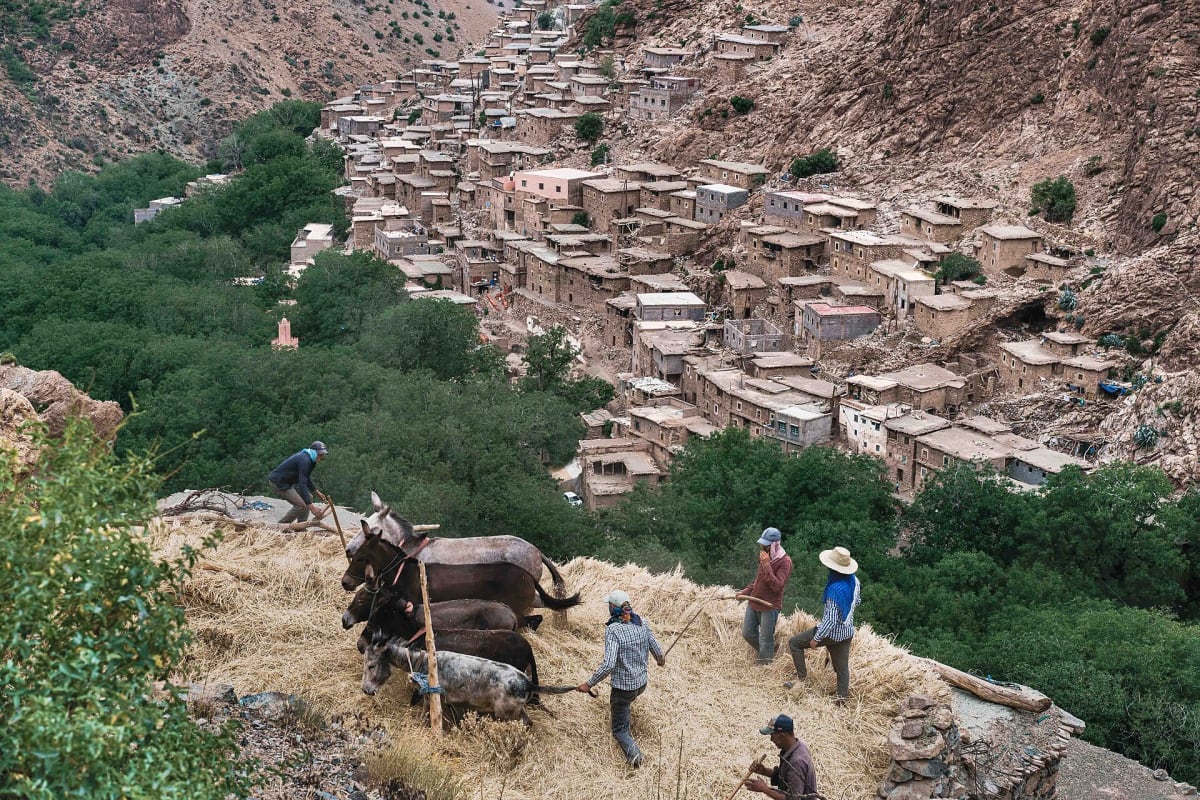
When travellers return from the High Atlas, they often talk less about the summits than about the people: the glass of tea offered without hesitation, the children waving from a rooftop, the guide who knew the name of every family in the valley. This is the Amazigh world — one of the oldest cultures of North Africa, still very much alive in the mountains around Imlil.
This article offers an introduction to Amazigh culture and traditions, so that you can understand more of what you see and experience it with respect.
Who are the Amazigh?
The Amazigh (plural Imazighen, often translated as "free people") are the indigenous people of North Africa, present long before the arrival of Arabic. In English and French they are often called Berbers, but many prefer their own name. In Morocco, Amazigh identity is strongest in the mountains — the Rif, the Middle Atlas and the High Atlas — and in the south.
In 2011, Morocco's constitution recognised Tamazight as an official language alongside Arabic, and in recent years Amazigh heritage has become increasingly visible in public life, from road signs to schools.
Language: Tashelhit and Tifinagh
In the Toubkal region, the everyday language is Tashelhit, one of the main Amazigh languages of Morocco. You may also notice the Tifinagh script — an alphabet of geometric letters — on official buildings and signs.
A few words go a long way in the mountains. Azul is a common Amazigh greeting, and your guide will happily teach you more. Locals also speak Moroccan Arabic, and French is widely understood.
Hospitality and mint tea
Hospitality is a value, not a service. A guest is welcomed, offered a seat and, almost always, mint tea. Tea is poured from height to create foam, often served with bread, olive oil, honey or amlou, a spread of almonds, argan oil and honey. Accepting a glass is a way of accepting the conversation that comes with it.
Good manners are simple: accept with your right hand, do not rush, and thank your hosts. If you are invited into a home, follow your guide's lead.
Mountain food
Food in the High Atlas is seasonal, local and generous:
- Tagine, slow-cooked in a clay pot, with vegetables, meat or both.
- Couscous, traditionally shared on Fridays.
- Bread baked in clay ovens or on hot stones.
- Walnuts, apples and almonds, grown on the terraces.
- Harira soup, especially during Ramadan.
Meals are often eaten from a shared dish, with bread used to scoop the food. It is a social moment as much as a meal.
Festivals and the calendar
Amazigh life follows both the Islamic calendar and the agricultural year.
- Yennayer, the Amazigh New Year, is celebrated in mid-January and has become an official public holiday in Morocco.
- Ramadan changes the rhythm of daily life: people fast during daylight hours, and evenings become social. Dates move each year, so check them when planning.
- Weddings and moussems (local festivals, often linked to a saint's shrine) bring music, dance and communal meals.
- Harvest time, especially the walnut harvest around Imlil in early autumn, is an important moment for families.
Music, craft and dress
Music and dance are central to celebrations, with drums, collective singing and call-and-response rhythms. In the High Atlas, ahidous and ahwash are traditional collective dances.
Crafts include weaving, pottery and jewellery, with patterns and symbols passed down through generations. In villages you may notice colourful scarves and traditional garments, especially during celebrations. Always ask before photographing people.
Daily life in the mountains
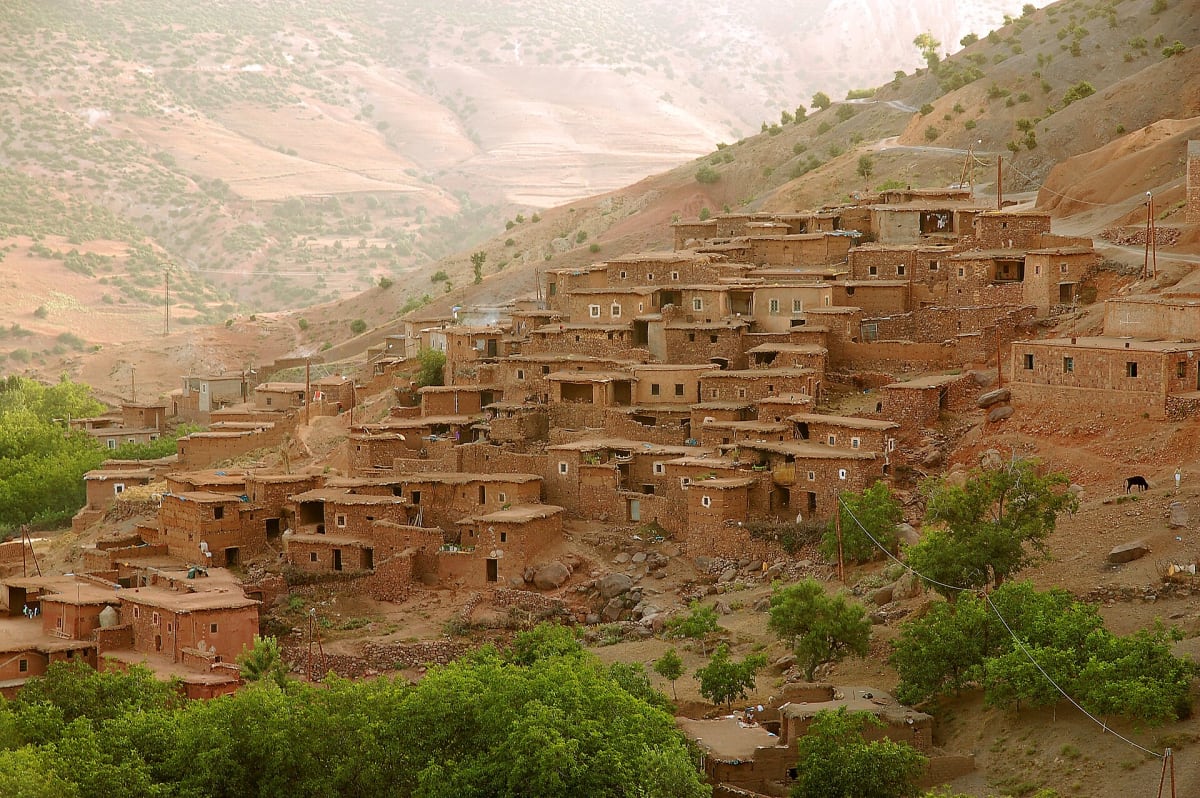
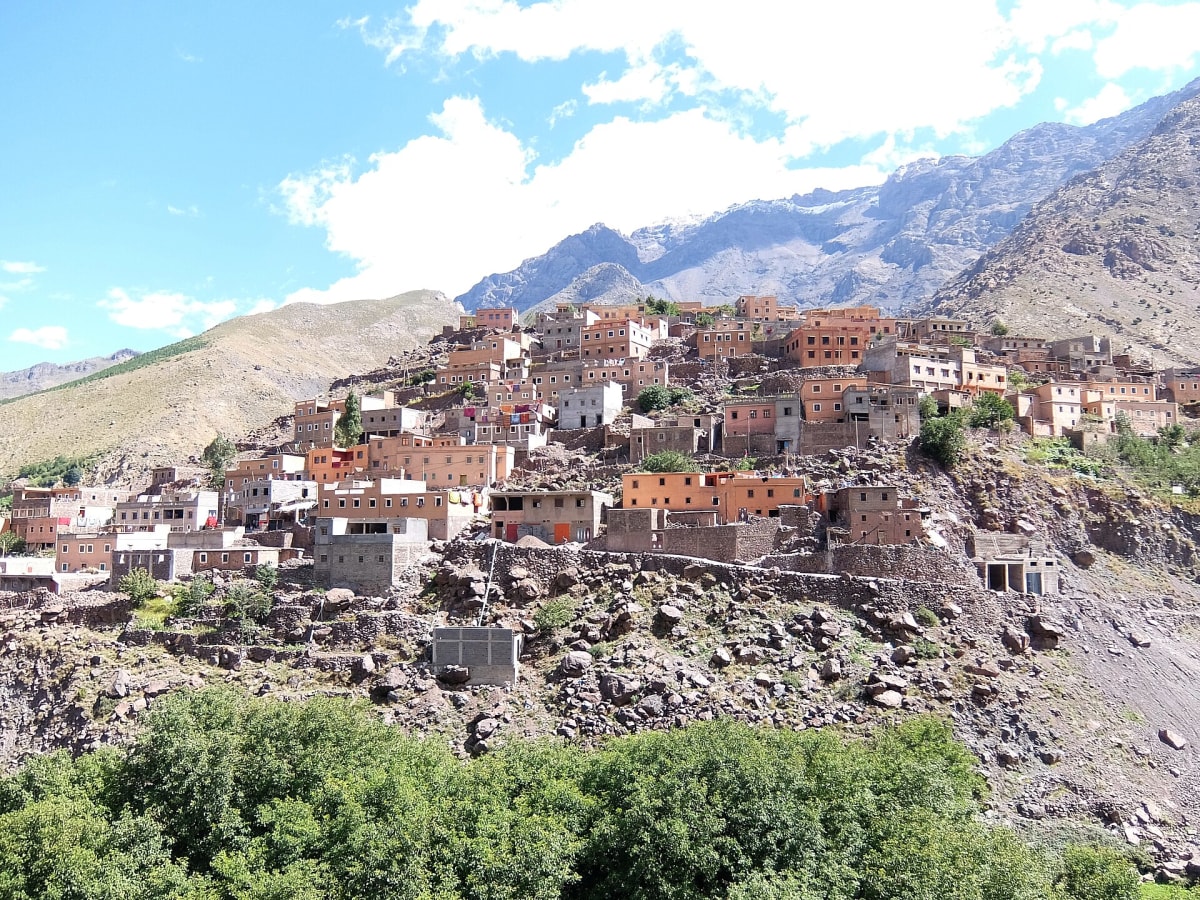
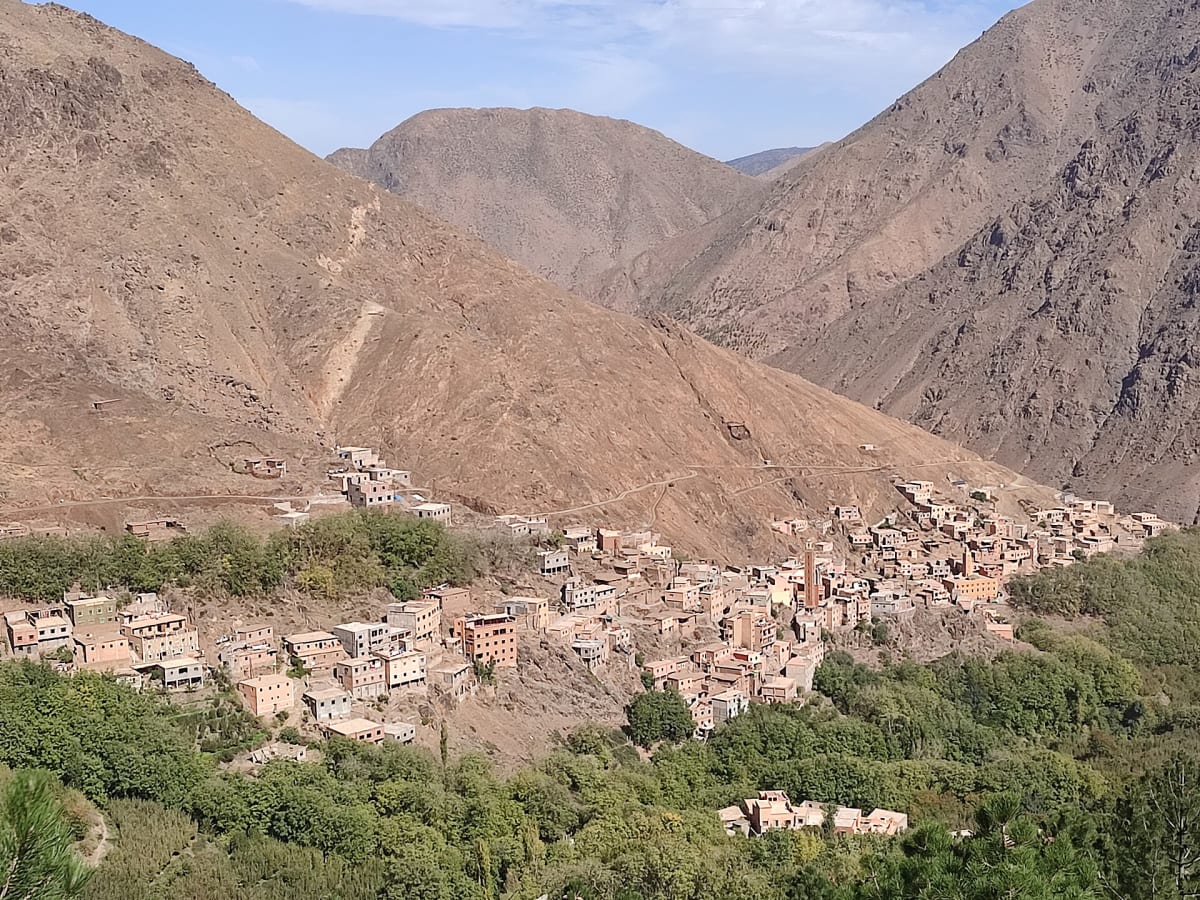
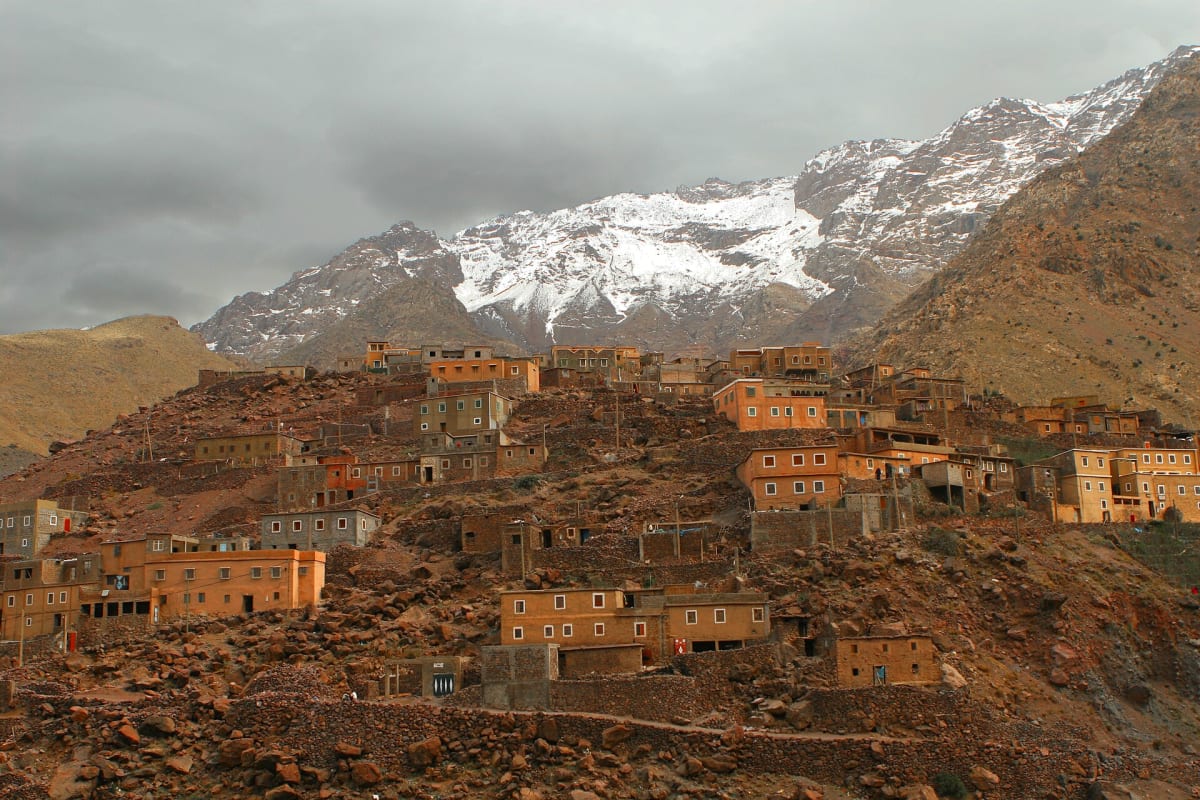
Life in the High Atlas is shaped by the land. Families share irrigation water, work terraced fields, keep animals and rely on mules to carry loads. Many young people work in cities or in tourism, returning home for harvests and holidays. You can read more about village architecture and farming in our article on traditional Berber villages in the High Atlas.
How to experience Amazigh culture respectfully
- Travel with a local guide. An Amazigh guide from the valley is the best interpreter of what you see. Meet ours in Abderrahim Choujaa's profile.
- Dress modestly, especially in villages.
- Ask before photographing people and respect a refusal.
- Avoid giving money or sweets to children; ask your guide about supporting local initiatives instead.
- Buy local — honey, walnuts, crafts — directly from producers when possible.
- Be curious. Ask questions, learn a few words and take your time.
Experience it for yourself
The best way to discover Amazigh culture is to spend unhurried time in a mountain village. Our Amazigh village and mountain hospitality experience and our Berber villages walk are designed for exactly that. You can also learn more about the valley on our Imlil destination page or read the best things to do in Imlil.
If you would like to combine culture, walking and a little mountain adventure, tell us about your trip and we will help you plan it.
Frequently asked questions
What is the difference between Amazigh and Berber?
Both words refer to the indigenous people of North Africa. Many people prefer 'Amazigh' (plural Imazighen), the name they use for themselves.
Which language is spoken in Imlil?
Most people speak Tashelhit, an Amazigh language, as well as Moroccan Arabic. French is widely understood, and English increasingly so.
What is Yennayer?
Yennayer is the Amazigh New Year, celebrated in mid-January. It is now an official public holiday in Morocco.
Ready for the mountains?
Tell us your dates and what you would like to do. We will reply personally with ideas, availability and a clear quote.