Transfers & Travel
Exploring Morocco by Private Car: Routes and Travel Tips
Classic road journeys from Marrakech — to the Atlas valleys, the Agafay desert, the Atlantic coast and over the Tizi n'Tichka pass — with realistic travel times and practical tips.
Atlas Trek TravelPublished 4 min read

Some of Morocco's most memorable experiences happen between destinations. The road from Marrakech climbs into the High Atlas in less than an hour, crosses passes above 2,000 metres, descends to the edge of the Sahara or runs across argan country to the Atlantic. Travelling by private car lets you see all of this at your own pace, stop where the view deserves it and arrive directly at your door.
This guide describes classic road journeys from Marrakech, with realistic distances and times, and offers practical tips for travelling by car in Morocco.
Why travel by private car?
- Flexibility: stop for photos, a mint tea in a village or a short walk.
- Comfort: no changing buses or waiting for shared taxis.
- Access: reach mountain villages and rural accommodation that public transport serves poorly.
- Time: go directly from A to B, coordinated with your treks and tours.
Short journeys from Marrakech
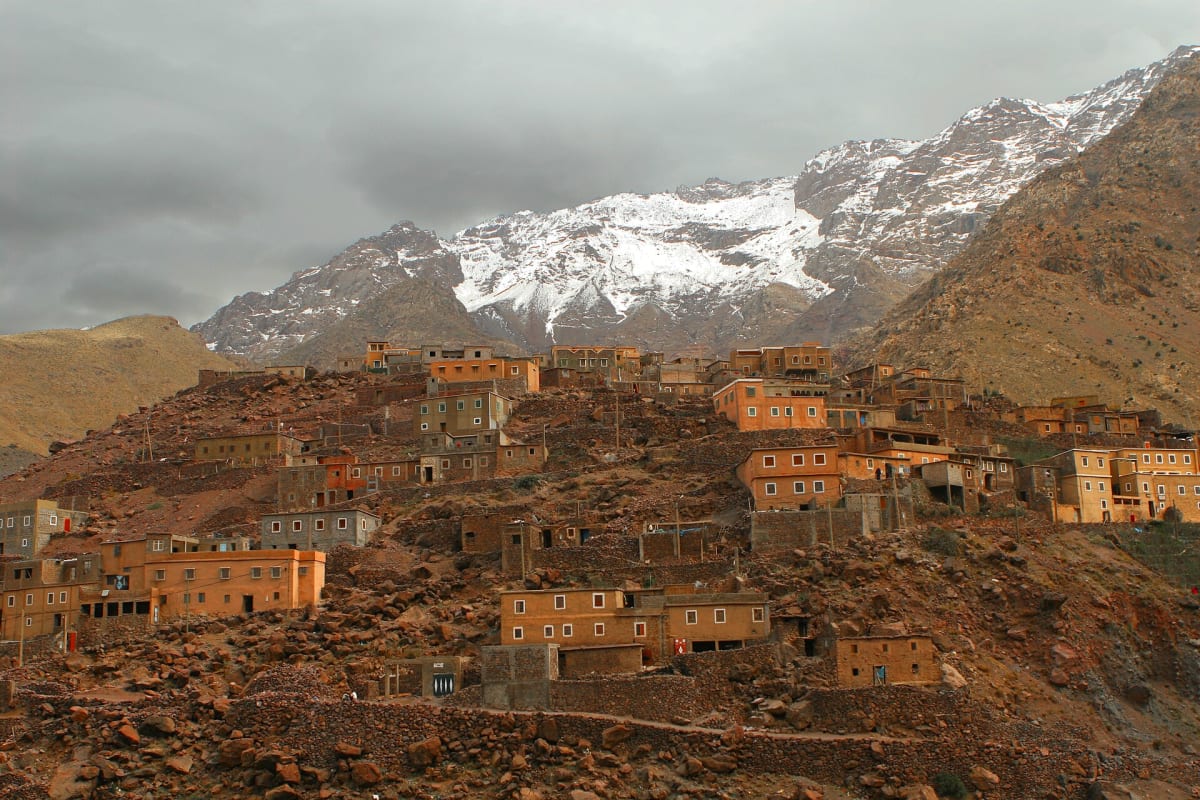
The Imlil valley and the High Atlas (about 65 km, around 1 h 30)
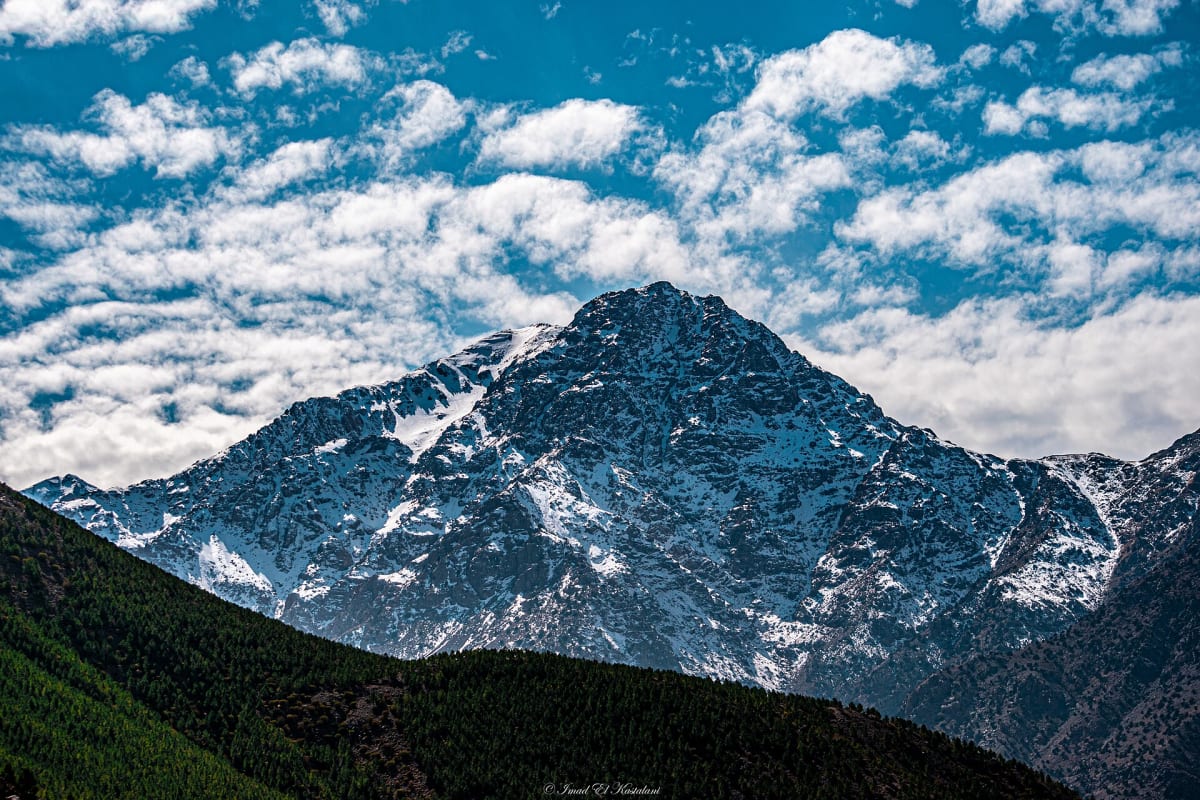
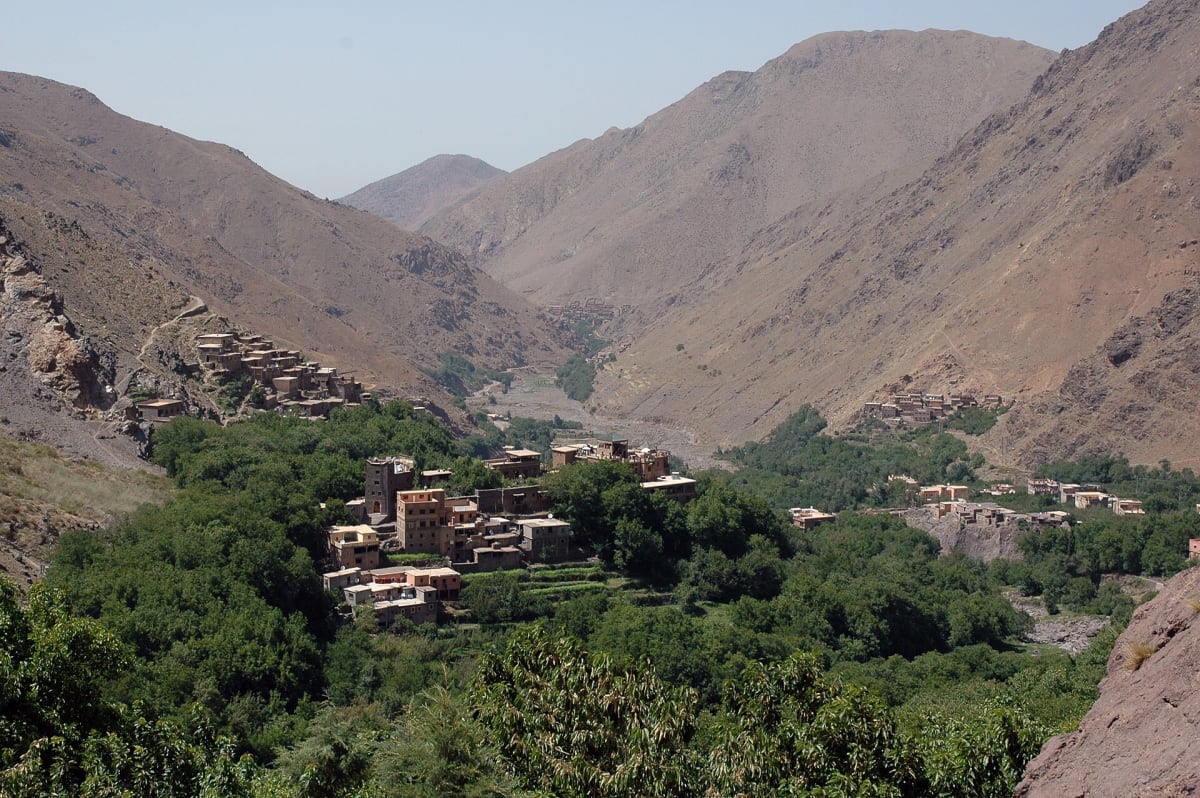
The most dramatic short drive from Marrakech: across the Haouz plain, through the Moulay Brahim gorge and up the valley to Imlil, at the foot of Toubkal. Ideal for a day of walking or the start of a trek. See our Marrakech to Imlil transfer and our guide to Imlil.
The Ourika valley (about 63 km to Setti Fatma, around 1 h 30)
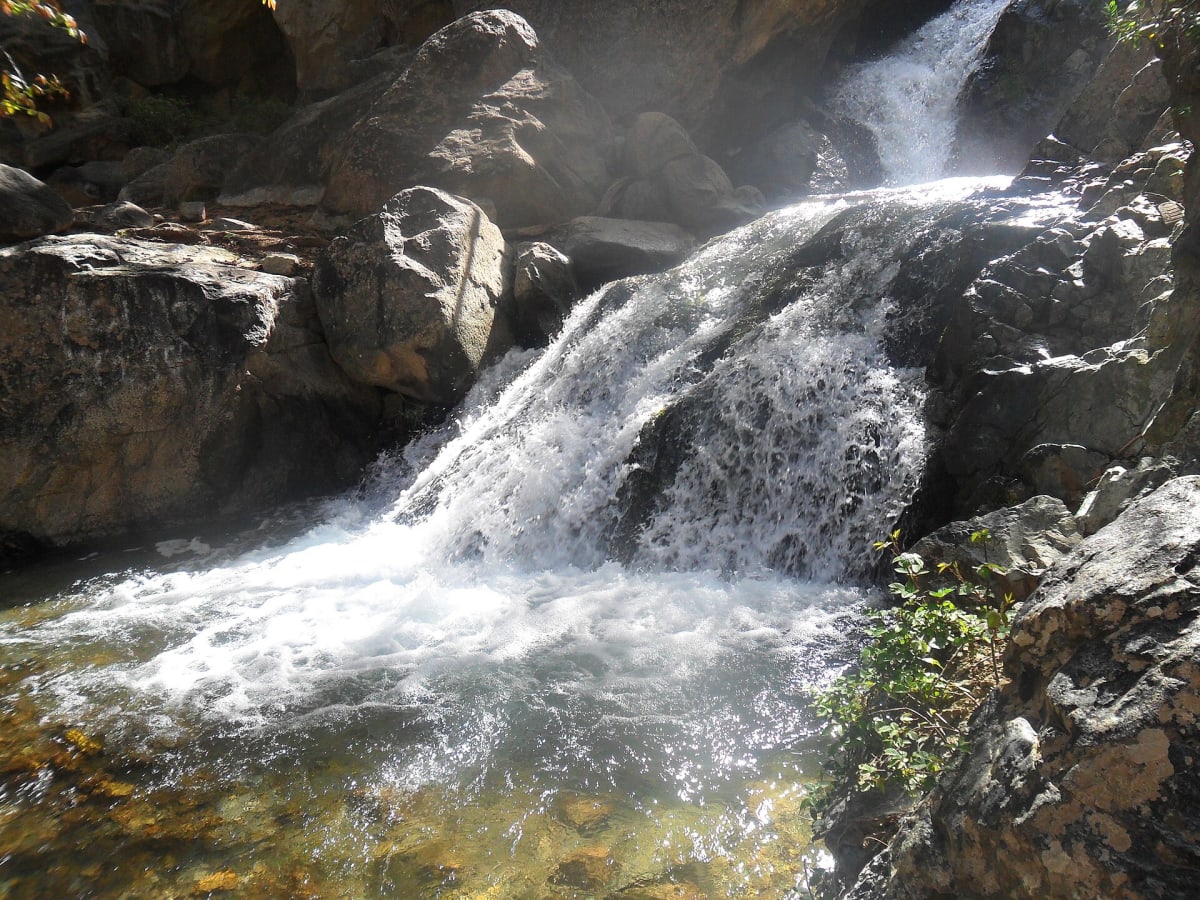
A green river valley with riverside villages and cascades above Setti Fatma. Popular for a day out; weekdays are calmer than weekends. See our Ourika valley transfer.
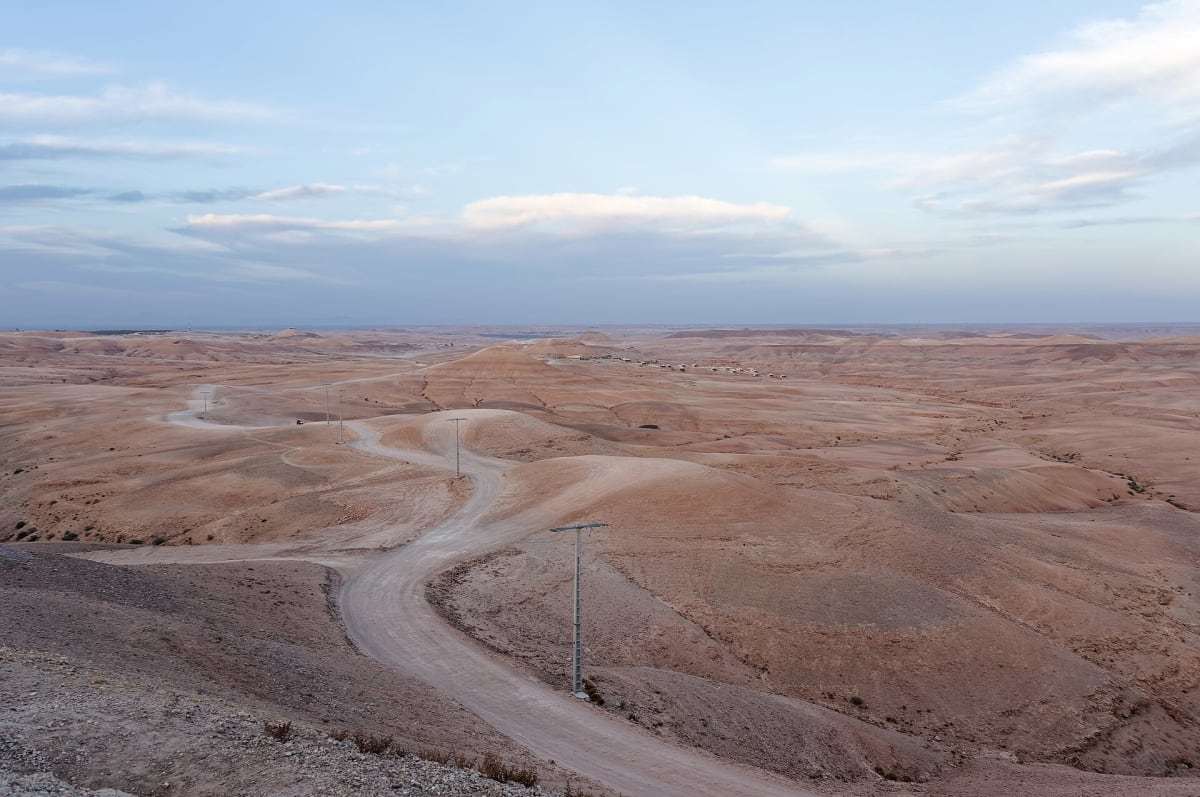
The Agafay desert (about 32 km, around 45–50 minutes)
A stony desert landscape of rolling hills with wide views of the High Atlas — perfect at sunset or for a night in a desert camp. It is not a sand-dune desert, but its open space feels a world away from the city. See our Agafay transfer.
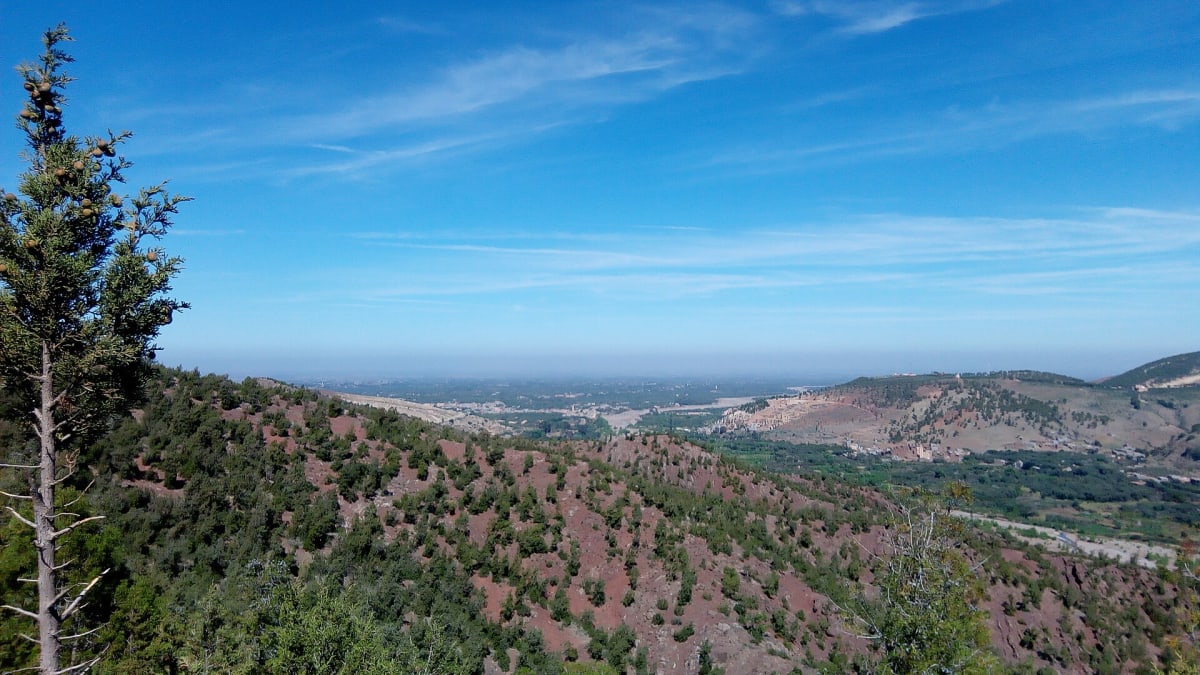
Asni and Ouirgane (about 49–65 km, around 1–1 h 30)
The market town of Asni, with its Saturday souk, and the quieter Nfis valley at Ouirgane, with red hills and olive groves. See our guides to Asni and Ouirgane.
Longer journeys
These classic routes are popular with travellers exploring Morocco by car. Distances below are approximate road distances. Please ask us whether a specific long-distance route can be arranged for your dates.
Over the Tizi n'Tichka to Ouarzazate (about 196 km, around 4 hours)
The N9 crosses the High Atlas via the Tizi n'Tichka, at 2,260 metres one of the highest road passes in the country. The road winds through Amazigh villages and spectacular mountain scenery before descending to the arid south. Near Ouarzazate, the fortified village of Aït Benhaddou is a UNESCO World Heritage Site. Allow plenty of time: mountain roads are slow, and you will want to stop often.
To the Atlantic at Essaouira (about 183 km, around 2 h 45–3 h)
West of Marrakech, the road crosses agricultural plains and argan country to the windswept port town of Essaouira, whose medina is listed by UNESCO. It is a popular extension for travellers who want sea air after the mountains.
To Agadir (about 250 km, around 3 hours)
A motorway links Marrakech and Agadir, making this one of the faster long-distance journeys, with views of the western High Atlas along the way.
Towards the Sahara dunes
The great sand dunes of the Moroccan Sahara are much further — a long day's drive or more from Marrakech, usually split over two days. Plan these journeys carefully and allow enough time.
Practical tips for road travel in Morocco
- Drive in daylight on mountain roads where possible. Lighting is limited, and animals, pedestrians and slow vehicles are common.
- Allow extra time in the mountains: winding roads, roadworks and weather can slow you down.
- Motion sickness: take a front seat and ask for breaks on long mountain sections.
- Bring water, snacks and a warm layer — temperatures change quickly with altitude.
- Cash in dirhams is useful for small purchases along the way.
- Medina access: cars cannot reach most riads in the old cities; drivers stop at the nearest accessible point.
- Seatbelts: always wear them.
Self-drive or private driver?
Renting a car gives complete independence, and many travellers enjoy it. But you will need to navigate busy city traffic, unfamiliar road habits, mountain roads and parking, and you will miss much of the scenery while concentrating on the road. A private driver lets you relax, ask questions about what you see and arrive directly at your accommodation — especially valuable for medinas and mountain villages. Read our complete guide to private transfers in Morocco for advice on what to ask before booking.
Combine roads, trails and culture
The best Moroccan journeys mix travel days with time on foot. You might fly into Marrakech, transfer straight to Imlil, trek for several days in the High Atlas, then spend a final evening in the Agafay desert before flying home. Our tailor-made Atlas experience combines private transfers, treks and cultural experiences in one plan.
Plan your route
Tell us where you want to go, how many people are travelling and how much luggage you have, and we will suggest a realistic itinerary and a clear quote — and be honest about which routes we can arrange. Contact our team to start planning.
Frequently asked questions
Is it better to rent a car or hire a private driver in Morocco?
Self-driving gives freedom but means navigating cities, mountain roads and parking yourself. A private driver lets you enjoy the scenery and arrive directly at your accommodation, which is especially helpful in medinas and mountain villages.
How long does it take to cross the High Atlas to Ouarzazate?
The road over the Tizi n'Tichka pass is about 196 km from Marrakech and usually takes around four hours without long stops, often more with photo breaks.
Is it safe to drive at night in Morocco?
Driving in daylight is strongly preferable, especially on mountain roads, where lighting is limited and you may meet animals, pedestrians and slow vehicles.
Ready for the mountains?
Tell us your dates and what you would like to do. We will reply personally with ideas, availability and a clear quote.